Drive Connect Rollout
About the project
Client:
Salesforce
Services:
Project Management
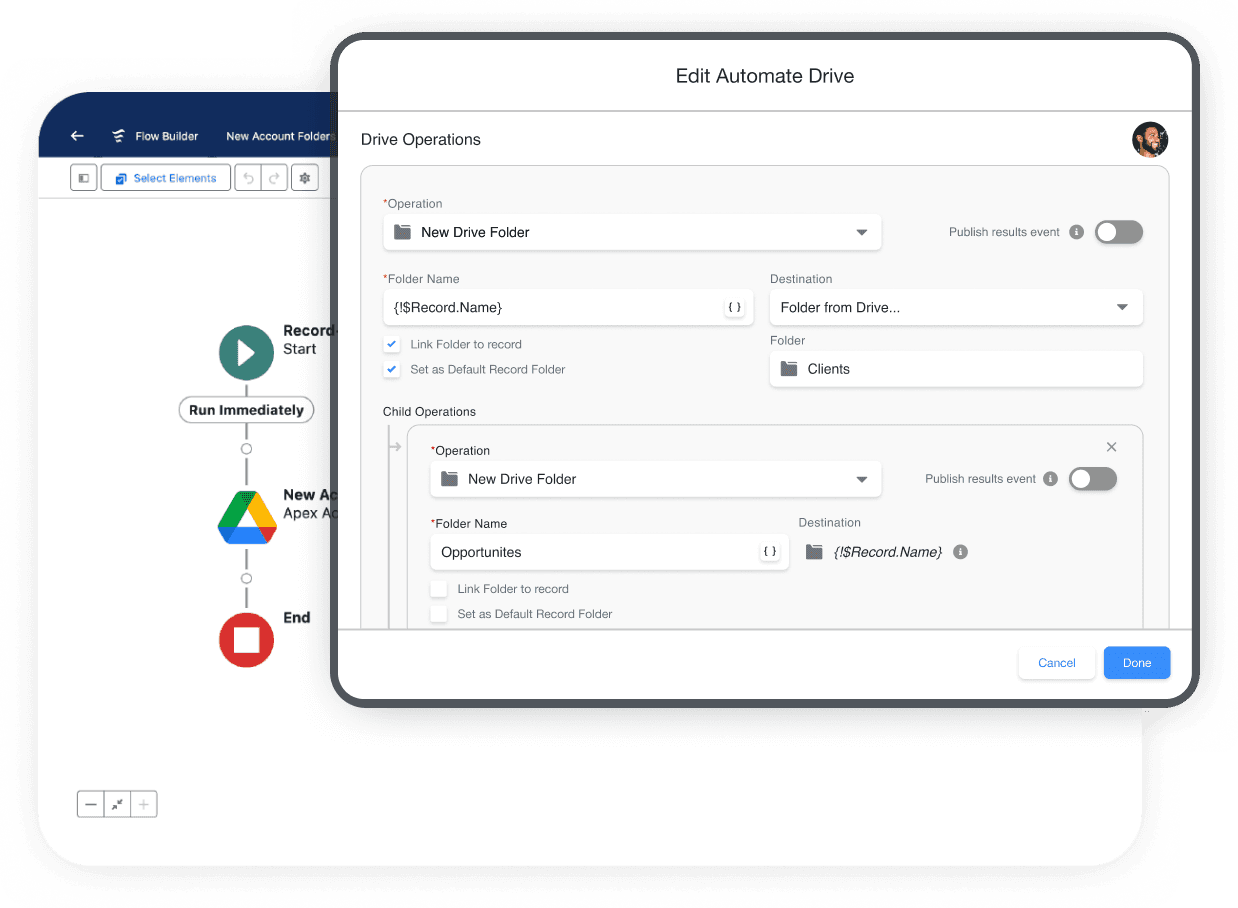
Enterprise File Governance & Adoption
Overview
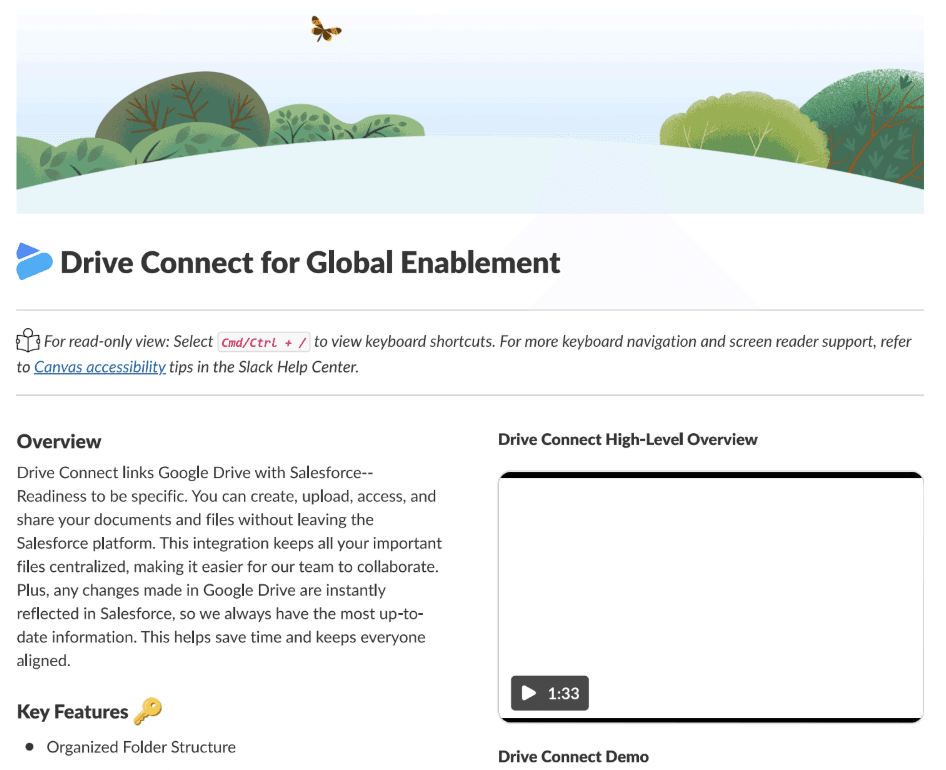
I led the pilot and scaled rollout of Drive Connect, transforming fragmented course file management into a governed, scalable content system across a 400–500-person learning organization. What began as a tool implementation evolved into an operational redesign focused on ownership clarity, workflow alignment, and long-term governance sustainability.
Context & Strategic Stakes
As the learning organization grew, course assets became increasingly dispersed across shared drives, personal folders, and inconsistent naming conventions. Teams relied on tribal knowledge to locate files. Broken links and duplicated assets were common. Updating a course often meant searching across multiple folders to confirm the “right” version of a file.
This fragmentation slowed production cycles, increased rework, and created risk when outdated materials were unintentionally reused. More importantly, it limited scalability. Without structural governance, operational friction would compound as headcount expanded.
The initiative required more than reorganizing folders — it required shifting working norms across hundreds of contributors.
What I Led
I began with an 80-person pilot, treating it as a change management experiment rather than a technical test. I aligned stakeholders across operations, learning design, and administration to define success criteria in measurable terms: reduction in file search time, improved link accuracy, and predictable ownership.
From there, I mapped real, day-to-day workflows — from course build to maintenance to revision cycles. This ensured the system reflected how teams actually worked, rather than imposing theoretical structure disconnected from practice.
I designed a standardized folder architecture and naming convention that allowed users to navigate intuitively from “course” to “asset” without guesswork. I clarified ownership roles for link maintenance and version control, reducing ambiguity around who was responsible for keeping course-to-folder connections accurate.
Governance guardrails were implemented to prevent drift. This included defining what belonged in Drive Connect, how new folders were created, what “done” looked like for linking assets, and escalation paths for edge cases.
Enablement was role-specific. Builders, reviewers, and administrators received tailored training focused on behavioral shifts — not just how to click through the tool. I created documentation that made the “why” explicit, reinforcing that the goal was operational efficiency, not procedural control.
Post-launch, I embedded feedback loops into the system. Support channels allowed rapid issue triage, and patterns from early friction points informed updates to documentation and governance standards. Adoption was reinforced during real workflow moments — such as course launches or major updates — rather than relying solely on initial training sessions.
“I had the pleasure of working with Adrienne during her time on our team, where her contributions were nothing short of outstanding. Thank to her for all her help with the Drive Connect enablement process. Her thoughtful approach to training and documentation was crucial to the success of the project. I could not have done it without her.”
Emily Ricco
Senior Director, Salesforce
Impact
Reduced time spent searching for course files and reference documentation
Improved consistency in asset linking and ownership accountability
Decreased duplication and broken-link incidents across live learning programs
Established a scalable governance model aligned to real content workflows
Enabled long-term operational efficiency as the organization expanded from pilot to 400–500 users